
Crazy Eights
MobilityWareCard
4.61.51K Reviews
- Version
- 2.1.0.1277
- Installs
- 1.00M
- Age Rating
- Everyone
Screenshots
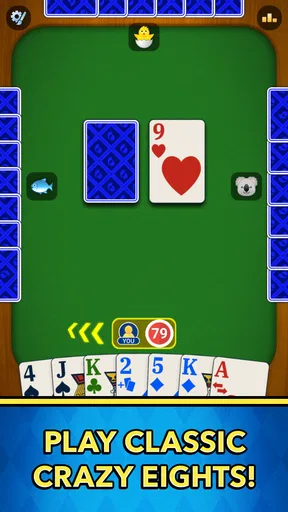
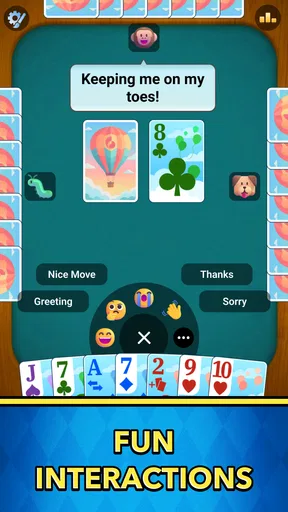
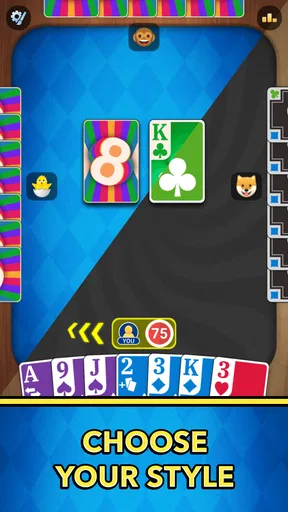
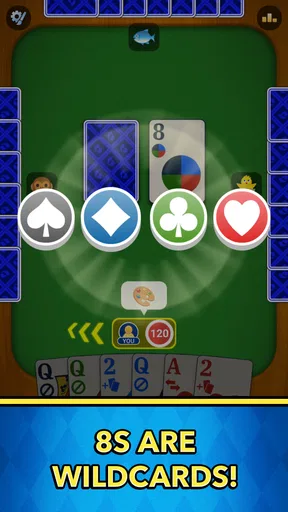

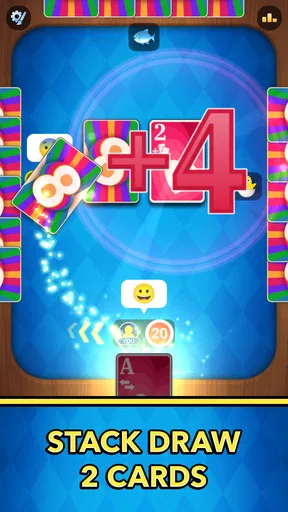
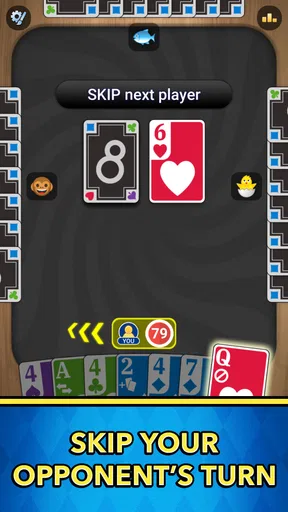
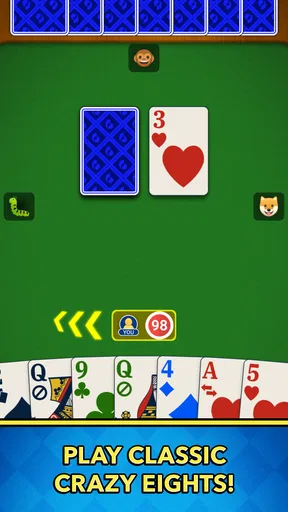
Our Review of Crazy Eights
 Analysis by Appyee
Crazy Eights is the kind of card game I can open when I have only a few spare minutes but still want something more engaging than a completely passive distraction. Developed by MobilityWare, it brings the familiar Crazy Eights format to Android in a straightforward package: play cards, change the suit when an eight appears, and try to empty your hand before the other players do. It is free to install, rated for Everyone, and has already attracted over a million installs, so it is easy to see why it has become a convenient choice for casual card-game sessions.
What I like most is that the basic idea is immediately understandable. You do not need to study a long tutorial or learn a complicated collection of special cards before making a move. At the same time, the game is not entirely mindless. Choosing when to spend an eight, deciding which suit to leave active, and managing the cards you draw gives each round a small tactical edge. That balance makes it approachable for a first-time player while leaving enough room to improve after several games.
What to expect when you start playing
The store summary presents it as a classic wild-eight game on the go, and that description is accurate without telling the whole story. The appeal is less about a large amount of content and more about how quickly a round can become playable. I can start with the familiar goal, understand the legal moves, and focus on the changing hand in front of me rather than learning a new game system.
For someone who has never played Crazy Eights, the central rule is simple: follow the current suit or match the current rank when possible. Eights act as wild cards, allowing the player who uses one to choose the next suit. That one decision is where the game becomes more interesting than a basic matching exercise. If I have several cards from one suit, I may choose that suit to make my next turns easier. If I suspect another player is waiting for a particular suit, changing it can also disrupt their plan.
The first few rounds are best approached as practice rather than as a test of skill. I recommend watching how the active suit changes and noticing which cards force me to draw. Trying to play quickly without reading the current card is the most common beginner mistake. The interface may make a move look obvious, but the useful question is not only “Can I play this card?” It is also “What does this leave me with afterward?”
That distinction matters because a legal move can still be a poor move. If I have one eight and several cards in a suit that is currently active, using the eight immediately may solve a short-term problem while removing my best escape later. On the other hand, holding an eight too long can be equally risky if the rest of my hand becomes difficult to play. The game rewards small decisions rather than complicated planning.
The experience is a good fit for people who enjoy traditional card games but do not want the longer commitment of a deep strategy title. It also works well as a gentle introduction for younger players because the content rating is Everyone and the rules can be explained in a few sentences. I would be more cautious about recommending it to someone looking for a large competitive ecosystem, extensive customization, or a campaign with a strong narrative. This is a compact card experience, not a broad role-playing game disguised as one.
Installing it and getting oriented
On Android, the game requires Android 8.0 or later. Once installed, I would begin by taking a moment to identify the current suit, the playable cards in my hand, and the control used to draw when no move is available. That short pause is worthwhile because most early frustration comes from misunderstanding the state of the table rather than from the rules themselves.
The current version is 1.9.2.1196, and the app is free to use with in-app purchases ranging from $3.99 to $29.99 per item. I see that pricing as a reason to treat optional spending carefully, especially if I am installing the game for an occasional break rather than as a main hobby. The free entry point makes it easy to try, but I would not assume that every optional convenience is necessary for enjoying the core card play.
One practical tip is to play the first round without trying to optimize every hand. Instead, use it to learn the rhythm of the interface. Locate the draw action, identify how the game shows the active suit, and watch what happens after an eight changes that suit. Once those elements become familiar, the mental effort can shift from operating the app to making better decisions.
The average rating is 4.7 from around 19 thousand ratings, with roughly 1.4 thousand written reviews. Those figures suggest that the straightforward format works well for many players, but they should not be read as a guarantee that every session will feel exciting. A simple card game depends heavily on whether you enjoy repeated short rounds. If you prefer constant novelty, the initial simplicity may feel limiting after the first few sessions.
Your first meaningful success
For a new player, the first satisfying goal should not be winning by luck. It should be making a deliberate use of an eight. When I choose a new suit because it improves my remaining hand, the move feels meaningful even if the round does not end in victory. That is the moment the game starts to make sense: the wild card is not just an emergency button but a way to shape the next part of the round.
A useful beginner workflow is to sort your thinking by suit, even if the cards are displayed in a fixed arrangement. Count which suit appears most often in your hand, then check whether playing a matching card would leave you with a manageable group. If you draw a card, do not treat that as wasted time. Use the new card to reconsider which suit you want to keep available and whether your eight should be saved.
Another small improvement is to avoid automatically playing the first legal card you notice. Compare the available choices. Matching the rank may be better than matching the suit if it allows you to preserve a stronger group of cards. Conversely, playing a card from your most common suit may reduce future risk even when another move appears equally valid. These choices are subtle, but they are exactly what gives a familiar ruleset replay value.
I also find it helpful to think one turn beyond the current move. If I change the suit to one that I do not hold, I may be helping the next player rather than myself. If I choose a suit represented by several cards in my hand, I create a better chance of continuing without drawing. This is not advanced card counting; it is simply using the information already visible on the table.
For a first meaningful win, patience is more useful than speed. Keep an eight available when your hand contains awkward cards, but do not protect it so rigidly that you miss a chance to reduce your hand. The best timing depends on what you are holding. That uncertainty is part of the fun, because there is no single opening move that works every time.
Where new players can become confused
The biggest point of confusion is usually the difference between having a card that looks useful and having a card that is actually playable under the current suit or rank. I recommend checking the active card before choosing anything. When an eight has just been played, the selected suit becomes the important reference, not necessarily the symbol on the eight itself.
It is also easy to misunderstand the purpose of drawing. Drawing is not simply a penalty that ends your turn in a negative way; it is the way the game handles a hand with no legal move. A newly drawn card may change your options, so I treat the draw as a reset of the decision rather than assuming the round is slipping away.
Another source of confusion is expecting every round to reward the same strategy. A hand with several cards in one suit encourages a different approach from a hand filled with scattered suits. If I use the same plan regardless of the cards I receive, the game can seem more random and frustrating than it really is. The better habit is to adapt the plan to the hand instead of waiting for the hand to fit a preferred plan.
Beginners may also spend an eight simply because it is exciting to change the suit. I understand the temptation, but I usually ask whether the change improves my own next turn. If I have no cards in the new suit, I may be handing control to the next player. If I have several cards in that suit, the same action can be a strong setup. The card is powerful because of its timing, not merely because it is wild.
There is a social confusion worth mentioning too. People familiar with different household versions of Crazy Eights may expect extra penalties, special ranks, or alternate draw rules. I would not bring assumptions from another version into the app without checking how the current round behaves. The safest approach is to play a test hand and learn the rules represented by this particular implementation rather than arguing with memory of a family variation.
How it compares with other casual card choices
Compared with solitaire, Crazy Eights feels less solitary and less methodical. Solitaire often asks me to build ordered stacks and solve a layout through careful sequencing. Here, the changing suit and the presence of other players create more immediate uncertainty. I have less control over the entire board, but I also get quicker decisions and a stronger sense that each turn can alter the direction of the round.
Compared with collectible card games, it is far less demanding. There are no decks to construct, collections to manage, or elaborate card interactions to memorize in the basic experience. That is a major strength when I want to play immediately. The trade-off is that players who enjoy building a personal strategy around hundreds of unique cards may find the traditional rules too narrow.
It also differs from a long-form digital board game because the commitment is smaller. I can use it during a short wait, after finishing a task, or while taking a break from a more demanding game. The downside is that the same compactness can make sessions feel repetitive if I play for a long time without a change of pace.
For families, the familiar rules are an advantage because someone who has played the physical game can usually understand the digital version quickly. For a person who wants a highly competitive online ladder, detailed player statistics, or a rich progression system, another card title would probably be a better match. I see this app as a convenient digital table for quick rounds, not as a replacement for every kind of card-game experience.
Everyday situations where it works best
A realistic use case is a short break during a commute or between appointments. I can open a round without needing to remember a storyline or rebuild a complicated setup. If I am interrupted, the game is easier to return to than a title that depends on continuous action or a long sequence of objectives. That makes it especially suitable for fragmented free time.
It can also work as a low-pressure introduction to digital games for a parent, grandparent, or friend who already knows the physical rules. The familiar structure reduces the learning barrier, while the app handles the dealing and turn flow. I would still explain the wild-eight decision before handing over the phone, because that is where the first strategic choice appears.
For children, I would use it as a way to practice recognizing suits, matching ranks, and thinking ahead, while remembering that the game is entertainment rather than a formal learning tool. The Everyone rating makes it broadly accessible, but the quality of the experience will still depend on whether the child enjoys repeated turn-based play. Some children will appreciate the clear goal; others may prefer faster action.
It is less suitable when I want a quiet solo puzzle with complete control. The uncertainty created by other hands can make a loss feel arbitrary if I am in the mood for a carefully solvable challenge. In that situation, solitaire may be the better choice. Likewise, if I want a deep multiplayer session with voice communication and long-term competition, I would look beyond this compact format.
Small habits that improve the next rounds
After the first win, I would focus on three habits. First, keep track of the active suit before every move. Second, treat eights as timing tools instead of automatic plays. Third, look at the shape of the remaining hand after each move, not just the number of cards left. A smaller hand is helpful, but a hand with one difficult card can still be dangerous.
One less obvious trade-off is that reducing your hand quickly is not always the same as improving your position. Playing a card that leaves several unrelated suits may make the final turns harder. Sometimes keeping a slightly larger but more coherent hand gives me better options. This is particularly useful when I have a choice between matching a rank and continuing a suit.
I also recommend changing the way you evaluate a draw. Instead of seeing it only as a setback, ask what the new card adds to your plan. It may give you a second card in a useful suit, create a rank match, or provide another way to avoid being trapped. This mindset makes unlucky hands less irritating and helps reveal opportunities that are easy to miss when focusing only on winning.
Finally, set a personal stopping point. Because rounds are short, it is easy to continue playing after the experience has stopped feeling enjoyable. I prefer using it as a small break and closing it when I notice that I am making rushed moves. The game is at its best when each decision feels light but intentional, not when I am grinding through rounds simply to keep a streak alive.
My recommendation after spending time with it
Crazy Eights is a strong choice for first-time digital card players and anyone who wants familiar rules with almost no learning barrier. MobilityWare keeps the central experience accessible, and the wild-eight mechanic gives the rounds enough decision-making to prevent them from being completely automatic. The free price makes trying it low-risk, while the Everyone rating broadens its appeal for family use.
My honest reservation is that its simplicity will not satisfy everyone. Players searching for a deep deck-building system, a large competitive structure, or constant new mechanics should choose a different kind of card game. The in-app purchase range also means I would review optional spending carefully rather than assuming every extra is essential.
For me, the best reason to install it is convenience. I can learn the rules in one sitting, make a genuinely useful strategic choice within the first round, and return later without needing a lengthy refresher. If that sounds like the kind of small, familiar challenge you want on your phone, this is an easy recommendation. If you need a game that keeps expanding after dozens of hours, its focused design may feel too limited.
Overall, I would describe it as a dependable digital version of a classic family card activity: quick to understand, pleasant in short sessions, and more tactical than its simple appearance suggests. Start by learning the active-suit logic, save eights with a purpose, and judge each move by the hand it creates. Those habits are enough to turn the first uncertain round into a satisfying, repeatable game.
Privacy and Permissions
See what permissions an app requests and how it handles your data.
- Other
- view network connections, full network access, control vibration, prevent device from sleeping, Google Play license check
Verdict
Strengths of Crazy Eights
- Simple rules make it easy for new players to start quickly.
- Short rounds fit well into quick gaming sessions.
- Supports strategic card play through suit and rank matching.
- Bright, clear card visuals make the table easy to follow.
- Offline play is useful when an internet connection is unavailable.
Limitations of Crazy Eights
- Gameplay can feel repetitive after extended sessions.
- Random card deals may strongly influence the final outcome.
- Limited depth may disappoint players seeking complex card strategy.
- Ads can interrupt the experience in the free version.
- Some features may require purchases or an internet connection.
Other Releases by MobilityWare
View All

Similar Picks in This Category
View All
Solitaire - Classic Card Games
MobilityWare4.6

UNO!™
Mattel163 Limited4.3

Spider Solitaire: Card Games
MobilityWare4.6

Solitaire.com - Classic Cards
Tripledot Studios Limited4.7

Plants vs. Zombies™ Heroes
ELECTRONIC ARTS4.1

Hearthstone
Blizzard Entertainment, Inc.4.1
Frequently Asked Questions
What is Crazy Eights, and how is the game played?
Crazy Eights is a fast-paced card game for one or more players in which the goal is to get rid of all your cards before your opponents do. Players usually match the card on the discard pile by suit or number. Eights are special cards that can change the active suit, adding a simple but strategic twist to every round.
Can I play Crazy Eights offline, or does it require an internet connection?
Most digital versions of Crazy Eights offer an offline mode against computer-controlled opponents, which is useful when traveling or when you do not have a reliable connection. However, online multiplayer, advertisements, cloud synchronization, leaderboards, and certain events may require internet access. Availability can vary depending on the specific Android or iOS version.
Does Crazy Eights support multiplayer games with friends?
Many Crazy Eights apps include multiplayer features, allowing you to compete with friends or other players online. Some versions may also support local play on the same device, while others rely entirely on online matchmaking. Before downloading, check whether the app supports private rooms, invitations, cross-platform play, and the number of players you want to include.
Is Crazy Eights suitable for children and beginners?
Crazy Eights is generally easy for beginners because its basic rules can be learned in just a few minutes. The colorful interface and short rounds can also make it appealing to younger players. Parents should still review the app’s advertisements, chat functions, in-app purchases, and privacy settings, since these features differ between versions and may affect the overall experience.
Are there in-app purchases or advertisements in Crazy Eights?
The monetization model depends on the Crazy Eights app you choose. Free versions commonly display advertisements between rounds or offer optional purchases for removing ads, unlocking card designs, or accessing additional features. Some apps may include virtual currency or subscriptions. Review the store listing and permission details carefully before downloading, especially if children will use the game.
Play our best games!


